
A Weekend-Home Buyer’s Guide to Farmhouse Plots Near Pune (2026)
A Sai Sparsh Properties guide · Land near Pune · Mulshi | Paud | Hinjewadi corridor
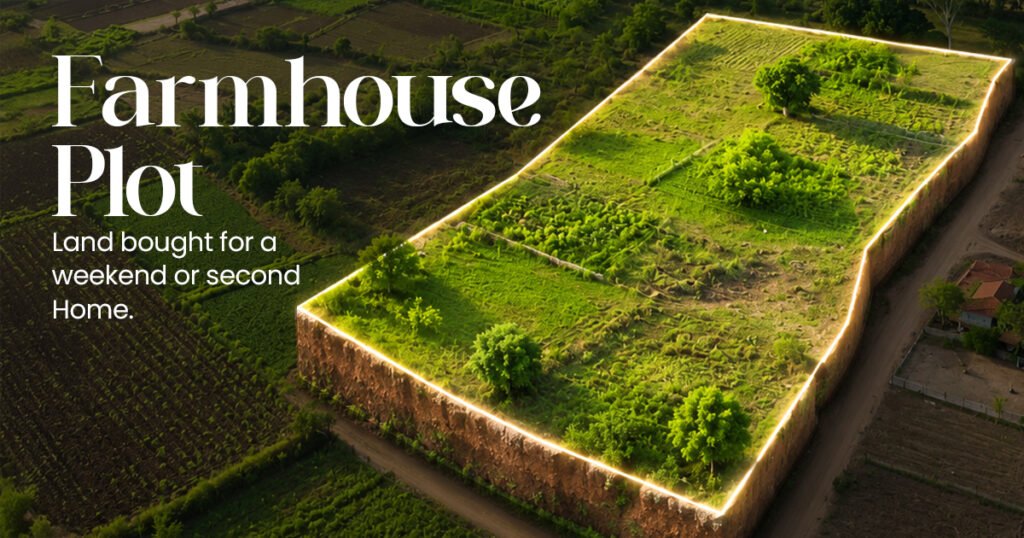
A farmhouse plot is the dream of a weekend away from the city — but it is also a real estate decision with its own rules. A farmhouse plot is land, usually in a green and scenic belt, bought to build a weekend home or second home. Around Pune, the Mulshi and Paud valleys have become the most sought-after settings for exactly this.
This guide explains what a farmhouse plot is, the construction rules that apply in Maharashtra, why Mulshi and Paud lead the market, how buyers think about farmhouse plots as an investment, and what to verify before you buy.
What is a farmhouse plot?
Quick answer: A farmhouse plot is a parcel of land — often five to twenty gunthas — bought to build a weekend home or second home, usually in green, scenic belts near Pune such as Mulshi and Paud. A farmhouse plot is defined by its intended lifestyle use rather than a single legal category, and any construction on it must follow Maharashtra’s rules.
Unlike ‘NA’ or ‘R-zone’, which are legal and zoning terms, ‘farmhouse plot’ describes intent — how the owner plans to use the land. Typically that means a weekend retreat: a modest house set in a larger green plot, used for breaks from the city rather than daily living.
Because the appeal is lifestyle, location does much of the work. Farmhouse plots near Pune are prized for greenery, views, water and quiet, which is why the Mulshi and Paud belt dominates buyer interest. Plot sizes are quoted in gunthas — one guntha is roughly 1,089 square feet — and a 5-guntha plot is a common, manageable size for a weekend home.
Farmhouse construction rules in Maharashtra
Quick answer: Farmhouse construction rules in Maharashtra limit how much you can build on a plot based on its zone and size, along with setback and height limits. Scenic plots in green or agricultural belts permit far less built-up area than an NA-Residential plot. Serious buyers confirm the permissible construction before buying, not after.
A farmhouse plot’s charm often comes from sitting in a green or low-development belt — and those very belts restrict how much you can build. Maharashtra’s rules cap the permissible built-up area, and set margins and heights, according to the plot’s zone and size. A plot in a green zone may allow only a small structure relative to its area, which is perfectly fine for a weekend home but a surprise if you expected a large villa.
This is why the smart order is: confirm the permissible construction first, then design the home to fit. It is also why NA status still matters for a farmhouse — if you intend a proper built structure, the land generally needs the right conversion and approvals, not just a nice view.
Why Mulshi and Paud for farmhouse plots near Pune?
Mulshi’s lakes and the Paud valley have become the default answer to ‘where should I look for a farmhouse plot near Pune?’. The draw is a combination of scenery, improving road access and a manageable drive from the city — close enough for a Friday-evening escape, far enough to feel like a real break.
Gated farmhouse plots add a layer that loose land cannot: shared internal roads, a boundary, security, water and basic infrastructure. The difference between a gated farmhouse plot and an isolated field is the difference between a home you will actually use and one you will struggle to reach or maintain. For weekend-home buyers, that infrastructure often matters more than the last rupee of price.
Farmhouse plots as an investment (weekend use and rental)
Quick answer: Farmhouse plots near Pune are bought for two overlapping reasons: personal weekend use and long-term land ownership. Some owners also let their farmhouse as an Airbnb or homestay when it is free, which can offset holding costs. Rental income and appreciation both depend on location, access and approvals — no plot guarantees either.
Many buyers weigh a farmhouse plot as both a lifestyle asset and a long-term hold. A weekend home you use often already pays a dividend in time away from the city; beyond that, some owners let the property as a short-stay homestay or Airbnb when the family is not using it, which can help offset maintenance and holding costs.
It is worth being clear-eyed here. Rental demand depends on location, access, the quality of the build and local rules, and it varies through the year. Land value, likewise, follows connectivity, approvals and how long you hold. Neither is guaranteed. The soundest approach is to buy a farmhouse plot you genuinely want to use, on verified paperwork, and treat any rental income or appreciation as an upside rather than the reason for the purchase.
What to check before buying a farmhouse plot
Quick answer: Before buying a farmhouse plot near Pune, verify the 7/12 extract, the zone and permissible construction, the NA status where a built home is planned, the title chain, and any MahaRERA and PMRDA approvals for a gated layout. Confirming how much you can legally build is as important as confirming clean title.
The lifestyle appeal should never skip the paperwork. Run this checklist before you buy:
- 7/12 extract (Satbara utara) — confirms the owner, survey number and any charges on the land.
- Zone and permissible construction — confirm the built-up area, setbacks and height you are actually allowed.
- NA status — where you plan a proper built home, confirm the land carries the right non-agricultural conversion.
- Title search — trace ownership through the chain of sale deeds.
- MahaRERA registration — for a gated or registered layout, check the RERA number and sanctioned plan.
- PMRDA / layout sanction — confirms internal roads, boundaries and open space are approved.
- Access and approach road — confirm a legal, usable road to the plot, not just a track across someone else’s land.
That last point catches many farmhouse buyers — a beautiful plot with no legal approach road is far less useful than it looks. An experienced land consultant in Pune checks access and permissible construction as a matter of routine.
Plot sizes and gated farmhouse projects
Farmhouse plots are typically larger than a city building plot but need not be huge. A 5-guntha plot — around 5,445 square feet — is a popular, workable size for a weekend home with a garden, while some buyers go to ten or twenty gunthas for more land around the house. Within a gated farmhouse project, plots come with shared infrastructure already in place, so you are buying into a planned community rather than an isolated parcel. For most weekend-home buyers near Pune, that combination of a manageable plot size and ready infrastructure is what turns the idea into something they will actually use.
Conclusion
A farmhouse plot is, at heart, a piece of land you buy for the weekends — but the dream holds up only when the paperwork does. Confirm the zone and the construction you are allowed, the clean title, the NA status where you plan to build, and a real road to the plot, and a farmhouse near Pune can be one of the more rewarding things you own.
This is where Sai Sparsh Properties works. For close to two decades we have helped families and NRI buyers own clear-title farmhouse, NA and R-zone plots across the Mulshi, Paud and Hinjewadi corridor — including gated, MahaRERA-registered and PMRDA-approved projects (MahaRERA No. P52100077528). Every plot is backed by the same document verification we would run for our own family.
If a weekend home in Mulshi or Paud is on your mind, talk to the Sai Sparsh team and book a site visit. Bring your questions about construction rules, zoning and 7/12 extracts — those are our favourite conversations.
📞 Call / WhatsApp: [+91 8975669373] 🌐 Website: [https://saisparsh.co.in/]
Frequently Asked Questions
What is a farmhouse plot?
A farmhouse plot is land, usually in a green and scenic belt, bought to build a weekend or second home. It is defined by intended use rather than a single legal category, and any construction must follow Maharashtra’s zone and building rules.
What are the farmhouse construction rules in Maharashtra?
Construction on a farmhouse plot is limited by the plot’s zone and size, with caps on built-up area and rules on setbacks and height. Green-belt plots allow less construction than NA-Residential plots, so confirm the permissible built-up area before buying.
Are farmhouse plots near Pune a good investment?
They are popular for weekend use and long-term ownership, and some owners earn rental income via homestays or Airbnb. Both rental demand and appreciation depend on location, access and approvals, and neither is guaranteed. Buy for use first and treat any upside as a bonus.
What size farmhouse plot should I buy near Pune?
Sizes are quoted in gunthas (about 1,089 sq ft each). A 5-guntha plot is a popular, workable size for a weekend home with a garden; some buyers choose ten to twenty gunthas for more land. Gated projects add shared roads, security and water.
What should I check before buying a farmhouse plot?
The 7/12 extract, the zone and permissible construction, NA status where you plan a built home, the title chain, MahaRERA and PMRDA approvals for a gated layout, and a legal approach road. Independent document verification is the best protection.